I’ve spent years working across the Pearl River Delta supply chain, and if there’s one category that’s evolved faster than almost anything else in the past few years, it’s open ear audio. Bone conduction, air conduction, open-back clip-ons — buyers come to me with specs from five different directions, and half the time they’ve already burned a sample order before they figure out what they actually need.
If you’re in the market for a sports open ear headphones supplier, this post is the one I wish existed when I was still learning how to navigate this space.
First, Get Clear on the Technology Bracket
“Open ear” is a marketing umbrella, not a technical spec. Before you call a single factory, you need to know which sub-category you’re sourcing:
Bone conduction transmits audio through the cheekbones, bypassing the ear canal entirely. These have been around longer, use a different transducer design, and tend to carry higher tooling costs. Shokz (formerly AfterShokz) owns significant brand equity here, which means most buyers in this space are either building a me-too product or trying to carve out a specialized niche — military, medical, industrial.
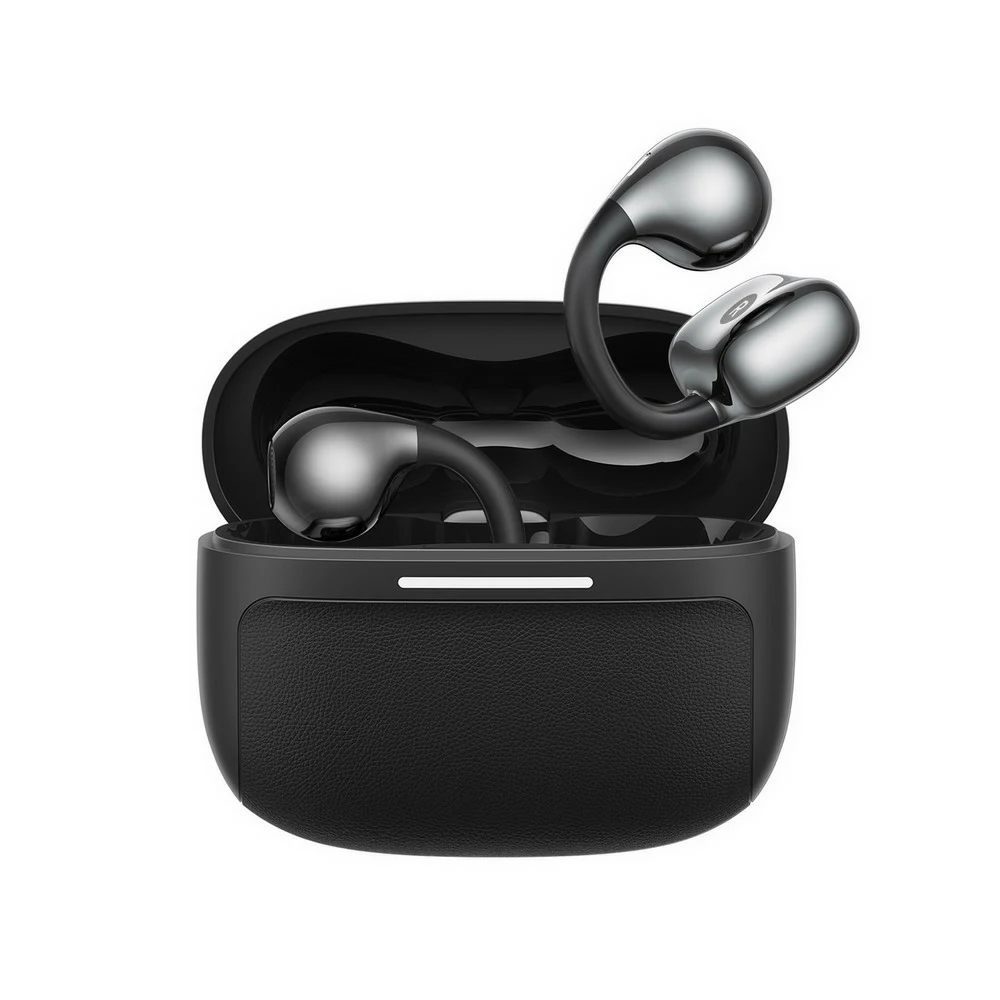
Air conduction open ear (the clip-on or ear-hook style) uses a small speaker driver positioned near the ear canal opening without inserting into it. This is currently the faster-growing segment for sports applications. Lower tooling barriers, more ODM options, and consumer acceptance has spiked since mainstream brands started going all-in on the form factor.
Open-back TWS earbuds — some factories pitch these as “open ear” even though they sit partially in the ear. Know the difference before you sign an NDA.
If you’re vague about this when speaking to a factory, you’ll get spec sheets for all three and lose two weeks going back and forth.
What Sports Use Cases Actually Demand From the Product
The “sports” positioning isn’t just a label. It drives real engineering requirements, and any sports open ear headphones supplier worth working with should be pushing back on your brief if these aren’t addressed:
IP rating — For running, cycling, or gym use, you need at minimum IPX5. Anything below that and you’re going to see warranty return rates that hurt your reputation with distributors. Serious outdoor brands spec IPX7 or higher.
Ear stability under movement — The fit mechanism matters enormously for sports. Ear-hook designs, titanium wraparound frames, clip-based fitment — the factory should have data on drop tests and wear testing, not just a render.
Microphone placement for ENC — A lot of buyers don’t think about mic performance until they’re on the phone during a run and sound like they’re inside a wind tunnel. Sports users take calls. ENC (Environmental Noise Cancellation) implementation on open ear designs requires specific mic placement and DSP tuning that’s easy to overlook at the sample stage.
Battery real estate — Open ear designs don’t have the ear canal to hide components, which means the battery either goes in the frame or in a thicker transducer housing. This is a real constraint. Push your supplier on runtime specs against actual load, not spec-sheet numbers.
How to Evaluate a Sports Open Ear Headphones Supplier
This is where most sourcing teams underinvest. They spend 80% of their time on price negotiation and 20% on factory qualification. The ratio should be closer to the reverse, at least for a first engagement.
Check whether the factory owns their acoustic IP or licenses it. For bone conduction especially, there’s meaningful patent thicket around the core transducer design. A supplier who can’t tell you the status of their technology licensing is a liability risk you don’t want downstream.
Ask specifically about sports validation testing. Sweat resistance isn’t just about the IP rating certificate — it’s about adhesives, PCB conformal coating, speaker mesh degradation over time. A factory that does genuine sports product development will have cycle test data. One that’s just waterproofing a standard earbud frame won’t.
Evaluate their ODM catalog depth. If a supplier shows you one or two base models in this form factor, they’re probably not deeply invested in the category. Mature suppliers in the open ear sports segment will have multiple frame architectures, driver configurations, and connectivity options (some with proprietary 2.4GHz alongside Bluetooth for low-latency sport applications).
Production line audit, not just a factory tour. Anyone can show you a clean showroom floor. The QC question is what happens at SMT, during final assembly, and at the end-of-line test station. Get specifics.
Tashells Audio: A Manufacturer Worth Knowing in This Space
Among the suppliers I’ve evaluated and worked alongside in Shenzhen, Tashells Audio has consistently stood out as one of the more serious players in the sports open ear segment. They’re not the flashiest factory on the pitch deck circuit, but that’s actually part of why they’re worth paying attention to.
Their open ear product line covers both air conduction and bone conduction architectures, which means their engineering team has genuine cross-category experience rather than just having bolted a new shell onto an existing earbud platform. For sports-oriented clients — especially those building for markets where durability claims need to be backed by real test data — that depth matters.
What I’ve found particularly useful is that Tashells is willing to have real technical conversations early in the process. When clients ask about mic placement for ENC on a clip-on form factor, or about titanium vs. plastic frame trade-offs for long-session wear comfort, they get substantive answers, not spec sheet forwarding.
Their MOQ flexibility for initial sample runs is also reasonable for brand-stage clients who aren’t yet committing to container volumes. If you’re building a sports audio brand and need a supplier that can grow with you from 500 units into the thousands, that matters more than a low unit price on a minimum you can’t move.
The Certification Question Nobody Asks Early Enough
FCC and CE are table stakes. Most buyers know this. What catches people is the downstream certification stack specific to sports products:
- UN38.3 — Required for lithium battery transport. Your freight forwarder will ask for this.
- RoHS — If you’re selling into Europe, non-negotiable.
- BQB (Bluetooth Qualification) — If your product uses a chipset that’s already qualified (most Airoha and BES-based designs are), you may only need product listing. But if there’s any custom firmware layer, you need to verify your qualification path with your supplier before you finalize the BOM.
A credible sports open ear headphones supplier should be able to walk you through the existing certification coverage on their platform products and flag what additional testing is required based on your target markets.
Final Thought
The open ear sports category is moving fast enough that supplier capability gaps can appear even between sample rounds. The factories that are genuinely invested in this space are updating their platforms, running independent validation tests, and staffing engineers who understand the specific biomechanics and acoustic requirements of sport use cases.
Sourcing in this category rewards due diligence more than most. Take the time to evaluate your supplier’s actual product development depth — not just their price list and delivery terms. The quality delta between a factory that treats this as a side category and one that’s built real expertise in it will show up in your returns data within the first quarter of sales.
If you’re actively qualifying suppliers in this space and want to benchmark what a well-specced sports open ear product development process looks like, Tashells Audio is a reasonable starting point for that conversation.